

Pediatric Occupational Therapy in Irvine, CA
Play-based, child-led occupational therapy for children from birth through age 12, in a two-story sensory gym built for it.
Our occupational therapists are licensed and registered, and all of them are trained in sensory integration.
What occupational therapy actually does
A child's occupation is being a child: getting dressed, holding a pencil, sitting through circle time, joining a game at recess, tolerating a haircut, settling down at bedtime. Occupational therapy builds the underlying skills those everyday things depend on.
Sometimes that means hand strength and coordination. Sometimes it is how a child's nervous system handles noise, movement, or touch. Sometimes it is planning and sequencing, or staying regulated when a day gets loud. The work looks like play, because play is how children practice hardest.
Occupational therapy is not about changing who your child is. It is about making the day easier for them, in ways that feel respectful to them and workable for your family.
Signs your child may benefit from occupational therapy
Any one of these on its own can be typical. It is when several cluster together, or start getting in the way of school, mealtimes, or friendships, that an evaluation is worth having.
Hands and school skills
- An awkward pencil grip, or one that keeps changing
- Letters that will not stay on the line, or vary wildly in size
- Avoids coloring, cutting, drawing, or building
- Tires quickly during writing and asks to stop
- Still working on buttons, zippers, and shoelaces
Sensory and regulation
- Covers ears in noisy places, or seeks out loud and fast
- Cannot get enough spinning and crashing, or avoids it entirely
- Big reactions to clothing tags, textures, haircuts, or nail trims
- Hard to settle after a busy day or a transition
- Meltdowns that last far longer than the thing that started them
Daily routines and moving
- Dressing or toileting is taking longer than you expected
- Bumps into furniture, trips, or seems generally clumsy
- Trouble following a routine with more than one or two steps
- Hangs back at playgrounds or avoids climbing equipment
- Eats a shrinking list of foods, often by texture
What we work on
Every plan is built around one child, but these are the areas occupational therapy at Tumble N' Dots most often targets.
- Emotional regulation. Noticing what a body feels like before it boils over, and having strategies that actually work in the moment.
- Fine motor skills. Hand strength, grasp, in-hand manipulation, and the coordination that pencils, scissors, and buttons ask for.
- Handwriting. Letter formation, spacing, line use, endurance, and the posture and shoulder stability underneath it.
- Sensory processing. How your child takes in movement, touch, sound, and body position, and what helps them stay comfortable and organized.
- Self-care and daily living. Dressing, toileting, grooming, mealtimes, and the independence that comes with them.
- Motor planning and praxis. Coming up with a plan for a new physical task, sequencing it, and carrying it out.
- Visual motor and visual perceptual skills. Copying from the board, catching a ball, finding a shoe in a messy room, puzzles and mazes.
- Eye-hand coordination. The link between what the eyes track and what the hands do.
- Strength, endurance, and range of motion. Core stability, postural control, and lasting through a school day.
- Executive functioning. Starting a task, staying with it, shifting between activities, and organizing materials and time.
What a session looks like
Fifty minutes that look like play and are not.
- Your child leads, the therapist steers. We follow what your child is drawn to and build the challenge into it, rather than running them through a worksheet.
- The gym is the tool. Swings, crash pads, an obstacle course, a climbing wall, and a zip line, chosen deliberately for what each one asks of the body.
- You are welcome in the room. Watching what works is most of how strategies make it home.
- It ends with something you can use. A strategy for the morning rush, a way to set up homework, a sensory idea for the car.
- The team talks. If your child also sees our speech or feeding therapists, they work under one roof and collaborate together.
- Progress gets checked. Goals at three and six months, an update after every session, regular check-ins with parents, and a formal re-evaluation every six.
Children we work with
We see children from birth through age 12, with a wide range of diagnoses and, often, no diagnosis at all. A referral is not required to start.
Ways we deliver occupational therapy
Occupational therapy is one of several services at our clinic. See all pediatric therapy services for the full picture, or start with how OT itself is delivered.
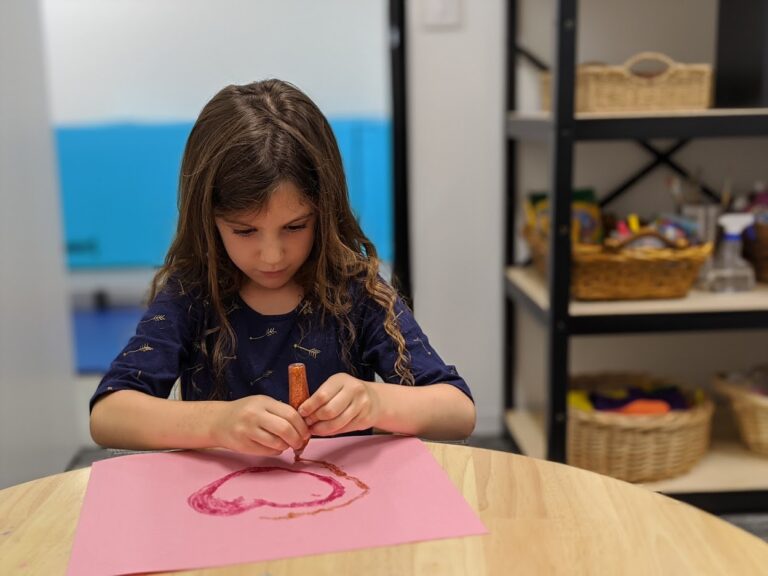
One-on-one occupational therapy
Individual 50-minute sessions at our Irvine clinic, and where it makes sense, at your child's school or home. This is where most families start.
How individual OT works
Sensory integration therapy
For children whose nervous systems over-respond or under-respond to movement, touch, and sound. Delivered by OTs trained in sensory integration.
Sensory integration therapy
Evaluations and consultations
A three-part evaluation with standardized assessments, a clinical observation session, and a family meeting where we walk you through what we found.
The OT evaluation
Group OT and social skills groups
Small, age-banded groups where children practice motor and social skills together, through cooking, movement, games, and play. Ages 2 through 12.
Groups and camps
Intensive therapy programs
Several sessions a week over spring, summer, and winter breaks, and year-round through Tumble-N-Grow. Repetition with familiar therapists tends to move goals faster.
Intensive programs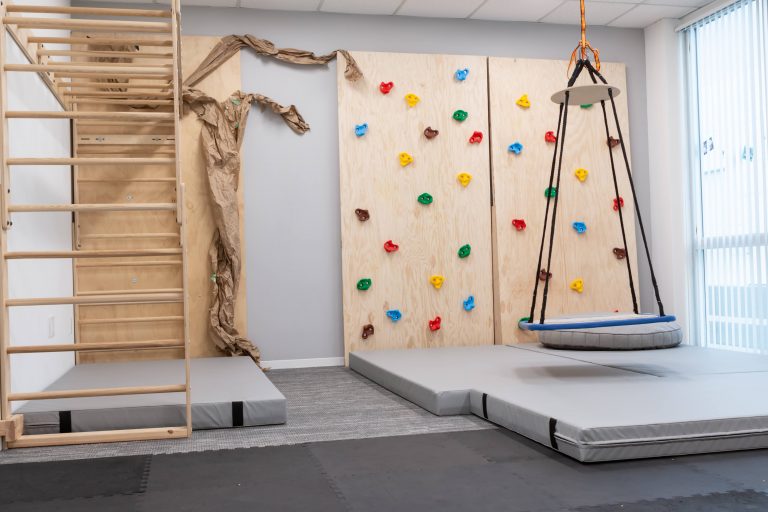
School collaboration, IEPs, and observations
We work inside partner classrooms across Orange County, observe your child in their own school, and attend IEP meetings so goals translate into the school day.
School collaborationsHow the evaluation works
Come in for a tour
Visit the clinic, meet our clinical staff, and see the gym your child would actually use. Bring what you have been noticing at home and at school.
Standardized assessment
A consult visit where we use formal, standardized assessments to measure specific skills.
Clinical observation
A separate session where we simply watch your child move, play, and problem-solve. Scores tell us one thing; watching a child climb tells us another.
The family meeting
We sit down and walk you through what we found in plain language, what we recommend, and what we would target first. You leave with a written report you can take to a pediatrician or school.
If your child already has a valid evaluation from another provider or a school district that is less than 10 months old, send it over and we will work from it rather than repeating the testing.
Who your child would work with
Our occupational therapists are licensed and registered, and every one of them is trained in sensory integration. Avital Shuster, our founder and clinical director, also holds post-professional Ayres Sensory Integration training through CLASI, along with DIRFloortime training, HBCC training for behaviorally challenging situations, and advanced SOS Approach to Feeding training. Dr. Phoebe Yam, one of our OTs, is a certified professional dog trainer and human-animal interaction specialist who runs our animal assisted therapy.
Caseloads stay deliberately small. Your child sees the same therapist week to week, and that therapist knows your family rather than your file.
Paying for occupational therapy
We are an out-of-network provider and are not contracted with any insurance plan, which means we do not bill your insurance directly.
- You receive a detailed superbill twice a month, on the 1st and the 15th, with every code your insurance needs to consider reimbursement.
- Superbills are always available in your parent portal, so you are never waiting on us for a copy.
- Occupational therapy is generally an eligible FSA and HSA expense.
- Many of our families do receive reimbursement. Rates vary by plan, and insurers pay families directly.
Serving Irvine and Orange County
Address
15265 Alton Parkway
Suite 140
Irvine, CA 92618
Contact
Call or text
(949) 835-3746
hello@TumbleNDots.com
Therapy hours
Mon to Fri 8:30am to 7:00pm
Sat 8:30am to 5:00pm
Sun 10:00am to 3:00pm
Office hours
Mon to Fri
9:00am to 6:00pm
Families come to us for occupational therapy from Irvine, Tustin, Lake Forest, Newport Beach, Newport Coast, Costa Mesa, Huntington Beach, Long Beach, Mission Viejo, Rancho Mission Viejo, Rancho Santa Margarita, Coto de Caza, Aliso Viejo, and across Orange County.
Occupational therapy questions parents ask
What is the difference between occupational therapy and physical therapy?
How long is an occupational therapy session?
At what age can my child start occupational therapy?
Do I need a diagnosis or a referral to start?
What is Ayres Sensory Integration?
Will I be in the room during sessions?
How long will my child need occupational therapy?
Can occupational therapy happen at my child's school?
Do you take insurance?
Come see the gym
The easiest way to know whether occupational therapy here is right for your child is to walk through the space. Book a tour with our clinical staff and bring your questions.